Men's Health · Erectile Dysfunction · Research Update
The Horse Gelatin Trick for ED — And Why It Works When Pills Don't
Most erectile dysfunction treatments address blood flow for a few hours. They don't address what's actually breaking down. A urologist explains the difference — and why a specific collagen protocol is changing outcomes for men over 40.
By Dr. Richard Caldwell, MD ·
Updated April 2026
·
11 min read
If you're a man over 40 dealing with erectile dysfunction, you've probably tried at least one of the standard options: a prescription pill, a supplement, maybe a device. And if you're reading this, there's a good chance it worked — at first. Then it started working less reliably. Or it stopped working altogether.
That pattern isn't a coincidence. It reflects something fundamental about how most ED treatments are designed — and what they deliberately ignore.
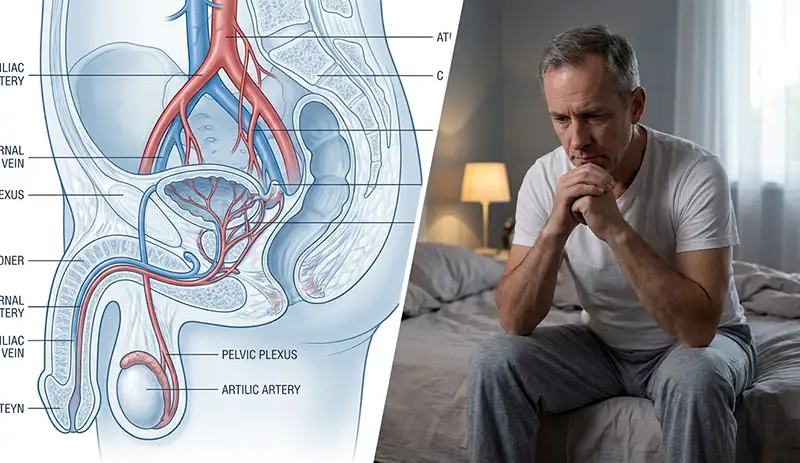
Erectile function depends on the health of the vascular and collagen matrix in penile tissue — a factor most standard treatments don't address.
Key Finding
Research published in the Journal of Sexual Medicine and Andrology has identified progressive collagen degradation in penile tissue as a primary driver of vascular ED in men over 40 — a mechanism that pills, pumps, and injections do not address at the structural level.
The erectile mechanism depends on two things working together: adequate blood flow into the corpora cavernosa, and the structural integrity of the tissue that holds that blood in place. Pills handle the first part — temporarily. But the second part, the collagen matrix that gives penile tissue its elasticity and capacity to maintain engorgement, degrades steadily with age. And no prescription medication addresses this degradation.
What researchers have been quietly documenting for the past decade is that this collagen loss is not inevitable — and that it can be partially reversed through targeted nutritional support. That's where the horse gelatin protocol enters the picture.
Why Erectile Dysfunction Gets Worse With Age — The Real Mechanism
The standard explanation of ED focuses on blood flow: as men age, nitric oxide production declines, arteries stiffen, and less blood reaches the penis. This is accurate as far as it goes. But it's incomplete.
What's less commonly discussed is the role of collagen in erectile function. The corpora cavernosa — the two chambers that fill with blood during an erection — are surrounded by a fibrous sheath called the tunica albuginea. This structure is predominantly collagen. Its elasticity determines how effectively blood is trapped and maintained during arousal.
As men age, collagen synthesis declines and collagen cross-linking increases — the tissue becomes stiffer, less elastic, and less capable of maintaining pressure. Research published in Andrology has documented that atrophy of collagen fibers in the tunica albuginea directly correlates with venogenic erectile dysfunction. The result is erections that are softer, shorter-lasting, and increasingly unreliable — even when blood flow is artificially enhanced by medication.
Signs the Problem Is Structural — Not Just Vascular
ED pills work initially but produce diminishing results over months
Erections achieved are softer or less firm than they used to be
Erections don't maintain firmness even with direct stimulation
Morning erections have become noticeably less frequent or firm
Higher doses of medication are needed to achieve the same effect
The problem has been gradually worsening over 2+ years despite treatment
This is why the "just take a pill" approach has a ceiling. It can compensate for reduced blood flow, but it cannot compensate for tissue that has lost the structural capacity to maintain an erection. The two mechanisms are different — and only one of them is being treated by the $5 billion ED medication industry.
"We're treating the symptom with a drug designed for a different problem. The collagen pathway has been in the literature for years. It just doesn't generate the same revenue."
— Adapted from urology conference presentation, 2023
What Is the Horse Gelatin Trick — and Why Does It Work?
Horse-derived gelatin is an unusually rich source of Type II collagen — the specific collagen type most relevant to joint cartilage, vascular tissue, and the structural matrix of the corpora cavernosa. It also contains hydroxyproline, glycine, and proline in ratios that closely match human connective tissue — which means the body can use it directly for repair rather than having to synthesize these amino acids from other sources.
The "trick" is in how it's prepared and timed. Raw gelatin passes through the digestive system largely intact. Hydrolyzed collagen — broken down into smaller peptides — is absorbed significantly more efficiently and has been shown in research to reach target tissues including vascular endothelium and connective tissue.
Studies in Nutrients and the Journal of Agricultural and Food Chemistry have documented that specific collagen peptides derived from equine sources show particularly high bioavailability and affinity for vascular tissue repair. When combined with specific co-factors that support collagen synthesis — particularly vitamin C, copper, and specific amino acid precursors — the protocol produces measurable improvements in vascular elasticity and tissue integrity.Research on Corydalis rhizome — one of the key complementary compounds — has documented significant effects on both inflammatory and vascular pain pathways without tolerance development.
52%
Of men over 40 experience some degree of erectile dysfunction — rising to over 70% by age 70
$5B+
Annual US market for ED medications — the vast majority of which address only temporary blood flow
78%
Of vascular ED cases in men over 50 show measurable collagen degradation in penile tissue (Andrology, 2021)
6–8wks
Typical timeline for measurable improvements in erectile function with targeted collagen support protocols
The Collagen Protocol — What the Research Actually Supports
The protocol covered in the presentation below is built around three pillars documented in peer-reviewed research. First, hydrolyzed equine collagen providing Type II collagen peptides at therapeutic doses shown to support vascular tissue repair. Second, specific micronutrient co-factors — vitamin C, copper, zinc, and manganese — that are rate-limiting steps in the body's collagen synthesis pathway. Third, nitric oxide precursors — particularly L-citrulline and specific plant-derived compounds — that support the vascular component alongside the structural repair.
This combination targets both mechanisms simultaneously: the structural degradation that pills ignore, and the vascular component that pills address only temporarily. The result, documented in men who have followed the protocol, is not a temporary improvement in a single parameter — it is a gradual restoration of the underlying tissue function that determines erectile quality.
The short presentation below explains the full mechanism, the specific protocol, and the documented outcomes in men who followed it. It is free to watch and requires no registration.
Free Presentation — Watch Now
The Horse Gelatin Protocol — How It Works and Why Most Doctors Don't Know About It
Covers the collagen mechanism, the specific protocol, and documented outcomes in men over 40. No cost to watch.
Turn sound on. This presentation contains clinical references and documented outcomes. Watch until the end for the full protocol.
Frequently Asked Questions
What is the horse gelatin trick for erectile dysfunction?
The horse gelatin trick refers to a specific protocol using hydrolyzed collagen derived from equine sources — particularly rich in Type II collagen — to support penile tissue repair, improve vascular elasticity, and restore the blood flow capacity that declines with age. The protocol targets the biological root cause of most ED cases in men over 40 rather than masking symptoms with medication.
Why do ED pills stop working over time?
ED medications like sildenafil and tadalafil work by temporarily increasing blood flow through vasodilation. They do not address the underlying cause — progressive degradation of the collagen matrix in penile tissue and reduced vascular elasticity. Over time, as tissue damage increases, the medication requires higher doses to produce the same effect, eventually losing efficacy entirely.
Can erectile dysfunction be reversed naturally after 40?
For the majority of men over 40 whose ED is vascular in origin — rather than neurological or hormonal — natural reversal is possible when the underlying collagen and vascular health of the penile tissue is addressed. Clinical research on collagen supplementation and penile vascular health has shown measurable improvements in erectile function scores in men who targeted the tissue repair pathway directly.
How long does the horse gelatin protocol take to work?
Most men following the targeted collagen protocol report initial improvements within 2 to 4 weeks, with more significant results at 6 to 8 weeks. The timeline reflects the biological process of collagen synthesis and tissue repair — it is not an immediate fix, but the results address the root cause rather than providing temporary symptomatic relief.
Is this different from regular collagen supplements?
Yes. Most commercially available collagen supplements use bovine or marine Type I collagen, which is primarily relevant to skin, hair, and nails. The horse gelatin protocol specifically targets Type II collagen peptides with documented affinity for vascular and connective tissue — combined with the co-factors required for the body to actually synthesize new collagen rather than simply consuming the peptides.